Laser cutting is a manufacturing process that uses a focused laser beam to cut flat material into precise shapes, profiles, holes, slots, panels, brackets, and sheet metal components.
It is commonly used in sheet metal fabrication because it can produce accurate flat profiles efficiently before bending, forming, welding, or finishing.
At Innova Forge, laser cutting supports custom sheet metal parts, flat profiles, brackets, covers, enclosures, panels, and production components.
How Laser Cutting Works
Laser cutting uses a concentrated beam of light to melt, burn, or vaporize material along a programmed cutting path. The machine follows the digital file to cut the required shape from sheet material.
Laser cutting is commonly used with sheet metals such as:
- Aluminum
- Stainless steel
- Mild steel
- Cold rolled steel
- Galvanized steel
- Copper, depending on thickness and project requirements
Material suitability depends on grade, thickness, geometry, tolerance, finish, and production requirements.
What Parts Are Commonly Laser Cut?
Laser cutting is often used for:
- Brackets
- Panels
- Covers
- Enclosures
- Frames
- Mounting plates
- Flat profiles
- Decorative panels
- Electrical panels
- Industrial sheet metal parts
- Prototype sheet metal components
- Production sheet metal components
Laser cutting is especially useful when the part begins as a flat sheet and requires accurate profiles.
When Should You Use Laser Cutting?
Laser cutting may be the right choice when:
- The part is made from sheet metal
- The design is primarily flat
- The part requires accurate profiles
- Holes, slots, and cutouts are needed
- Quantity may range from prototype to production
- The part will be bent or formed after cutting
- The part needs finishing such as powder coating or brushing
- You need repeatable sheet metal components
It is often a good process for brackets, plates, panels, covers, and enclosure components.
Laser Cutting vs CNC Machining
Laser cutting and CNC machining are both precise, but they serve different needs.
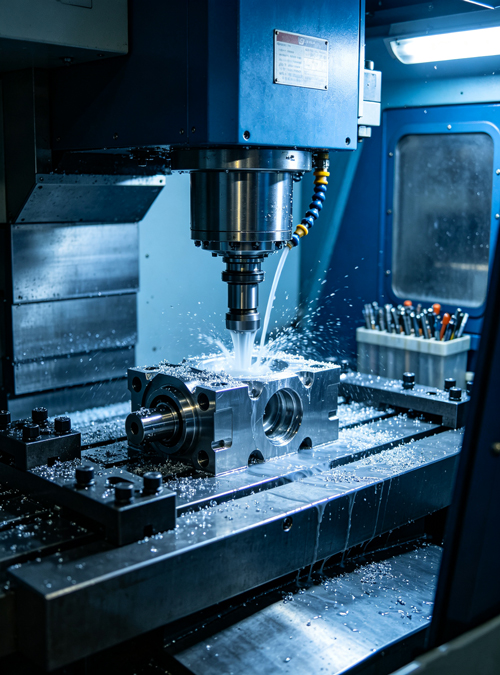
Laser cutting is best for flat sheet material and 2D profiles. CNC machining is best for 3D features, pockets, threads, complex surfaces, and thicker machined components.
Choose laser cutting when the part is a flat sheet metal profile. Choose CNC machining when the part requires depth, pockets, precise machined features, or complex 3D geometry.
Laser Cutting and Bending
Many sheet metal parts are laser cut first and then bent or formed. This is common for brackets, covers, panels, enclosures, and fabricated assemblies.
When designing for laser cutting and bending, it is important to consider:
- Material thickness
- Bend radius
- Bend direction
- Hole location near bends
- Bend relief
- Flat pattern design
- Surface finish
- Coating thickness
The design should be reviewed before production to make sure the part can be cut and formed properly.
Materials and Thickness
Material thickness affects cutting speed, edge quality, cost, and process suitability. Thicker materials may require more power, slower cutting, or additional process review.
If you need a specific material thickness, it should be clearly stated in the drawing or RFQ.
Surface Finish After Laser Cutting
Laser-cut parts may be finished after cutting and forming. Common options include:
- Powder coating
- Painting
- Brushing
- Polishing
- Plating
- Bead blasting
- Deburring
- Anodizing for suitable aluminum parts
Finishing requirements should be communicated early because they can affect tolerance, masking, appearance, and lead time.
Design Tips for Laser Cutting
To improve manufacturability, consider:
- Use suitable material thickness
- Avoid extremely narrow features
- Keep holes away from bend lines
- Consider minimum hole sizes
- Avoid sharp internal features where unnecessary
- Confirm bend requirements
- Define critical dimensions
- Provide a flat pattern if available
- Include material and finish requirements
Good design preparation helps reduce delays and production risk.
Final Thoughts
Laser cutting is a practical and efficient process for flat sheet metal parts, brackets, panels, covers, enclosures, and production components. It is often used together with bending, welding, and finishing to create complete sheet metal parts.
The right process depends on the part geometry, material, thickness, tolerance, quantity, and finish requirements.
At Innova Forge, our team can review your drawing and sheet metal requirements to help identify suitable laser cutting and fabrication options.
Need a Laser Cutting Quote?
Upload your drawing, CAD file, material, thickness, quantity, and finish requirements. Our team can review your project and help move it toward production.
Ready to discuss your project?
Upload your CAD file, drawing, material requirement, quantity, and project notes. Our team can review your requirements and help identify suitable manufacturing options.


 ️