Advanced Manufacturing Solution
for Custom Metal and Plastic Parts
Every custom part has different performance, material, tolerance, appearance, and production requirements. At Innova Forge, we support a wide range of manufacturing processes so customers can choose the most suitable solution for their product stage, application, and production volume.
From precision CNC machined components and rapid prototypes to molded plastic parts, sheet metal assemblies, and finished production parts, our team helps bridge the gap between design and manufacturing.
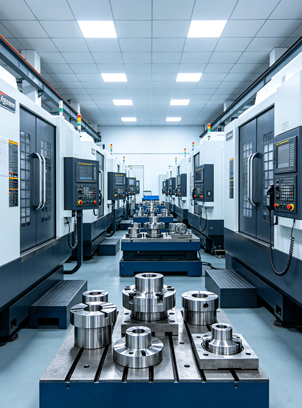
CNC machining is a versatile manufacturing process used to produce custom parts from solid blocks, bars, plates, or sheets of material. It is suitable for both metals and engineering plastics and supports prototypes, low-volume production, and precision components.
CNC turning is used to manufacture cylindrical or round components by rotating material while cutting tools shape the part. It is commonly used for shafts, bushings, spacers, pins, fittings, threaded components, and other rotational parts.
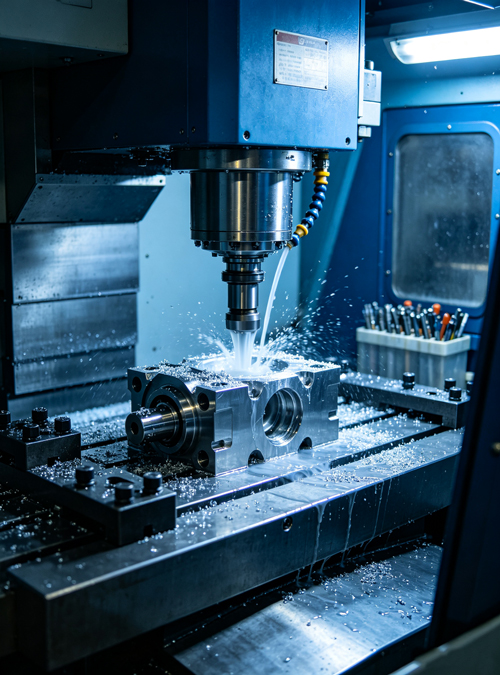
CNC milling is used to machine complex shapes, pockets, slots, holes, flat surfaces, profiles, and detailed features. It is one of the most common processes for producing custom components with precise geometry and functional requirements.
EDM machining is used for precision features, tooling components, complex internal shapes, tight corners, and materials or geometries that may be difficult to machine with conventional cutting methods.
SLA is commonly used for parts that require fine details, smooth surfaces, and strong visual quality. It is suitable for appearance models, design validation, fit checks, and prototype parts.
SLS is commonly used to produce durable plastic prototypes and functional parts without support structures. It is suitable for complex geometries and functional testing requirements.
MJF is used to produce strong, detailed plastic parts with consistent mechanical properties. It is often suitable for functional prototypes, low-volume production, and parts that require more strength.
FDM is a cost-effective 3D printing process used for early-stage prototypes, concept models, fit checks, and simple functional parts. It is often selected when speed and affordability matter most.
Insert molding is a process where a pre-formed insert, such as metal hardware or another component, is placed into a mold and plastic is molded around it. This process can help combine multiple parts into one molded component.
Overmolding is used to mold one material over another material or component. It is commonly used to improve grip, comfort, appearance, sealing, protection, or product functionality.
Plastic injection molding is used to produce consistent plastic parts by injecting molten material into a custom mold. It is suitable for repeat production when part design, material, finish, and volume requirements are clearly defined.
Liquid silicone rubber molding is used to produce flexible, durable, and elastic components. It is often selected for parts that require flexibility, sealing performance, soft-touch properties, or resistance to repeated use.
Laser cutting is used to cut flat sheet metal into accurate profiles, holes, slots, panels, brackets, and custom shapes. It is suitable for prototypes, low-volume parts, and production sheet metal components.
Bending is used to form sheet metal into angles, flanges, brackets, enclosures, and structural shapes. It is commonly used after laser cutting to create finished sheet metal parts.
Custom sheet metal fabrication combines cutting, bending, forming, finishing, and assembly support to create complete sheet metal components. This process is suitable for customers who need parts made to specific drawings and finish requirements.
Vacuum casting is commonly used for producing small batches of plastic-like parts, appearance prototypes, and functional samples. It can be a practical option when customers need multiple prototype parts before investing in injection molding tooling.
Surface finishing can improve appearance, corrosion resistance, wear performance, surface protection, and product presentation. Finish selection depends on material, part geometry, application, and cosmetic requirements.
Parts on demand supports customers who need custom parts produced based on digital files, drawings, or repeat production requirements. This service is suitable for prototypes, replacement parts, low-volume production, and flexible manufacturing needs.
The best manufacturing process depends on the part’s material, geometry, tolerance requirements, surface finish, production volume, and application.
Best when you need precision, strength, tight features, or metal and engineering plastic parts without mold tooling.
Best for fast prototypes, design validation, concept models, or early-stage product testing.
Best when the part design is finalized and repeat plastic production is required.
Best when your part is made from flat metal sheet and requires cutting, bending, forming, or finishing.
Best when you need small batches of prototype or pre-production parts before committing to injection molding.
To help us review your project and provide a more accurate quote, please include the items below whenever available.
Innova Forge provides CNC machining, CNC milling, CNC turning, EDM machining, sheet metal fabrication, laser cutting, injection molding, mold making, 3D printing, surface finishing, and prototype-to-production support.
Yes. Innova Forge supports custom metal and plastic parts using processes such as CNC machining, sheet metal fabrication, injection molding, 3D printing, and finishing.
Yes. Customers can submit CAD files, drawings, material requirements, quantities, and application notes so the team can review suitable manufacturing options.
Yes. Innova Forge supports early prototypes, functional samples, low-volume production, tooling, and scalable production programs.
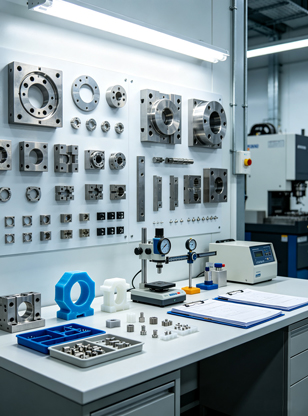
Include CAD files, drawings, material, quantity, tolerance requirements, surface finish, application details, inspection requirements, and target lead time when available.
Upload your CAD file, drawing, or project requirements and our team will review suitable material, process, and production options.



 ️
️