3D printing, CNC machining, and injection molding are all useful manufacturing processes, but they are best suited for different project stages and requirements.
A customer developing a new product may use 3D printing for early concepts, CNC machining for functional prototypes, and injection molding for production. Choosing the right process depends on the design stage, material requirements, quantity, tolerance, surface finish, budget, and timeline.
At Innova Forge, we help customers review these options so they can select the process that best fits the current stage of the project.
What Is 3D Printing Best For?
3D printing is an additive manufacturing process that builds parts layer by layer. It is often used for fast prototypes, visual models, design validation, and early-stage concept testing.
3D printing is commonly used when:
- You need a quick concept model
- The design is still changing
- Geometry is complex
- Quantity is very low
- You need visual validation
- You need to test fit before committing to another process
- Speed matters more than final material performance
3D printing is useful in the early design stage because it allows teams to see and test a physical version quickly.
What Is CNC Machining Best For?
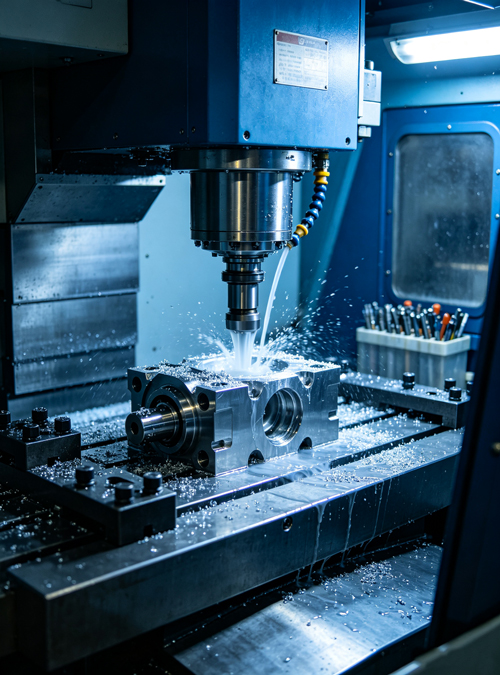
CNC machining is a subtractive process that cuts material from a solid block, bar, plate, or sheet. It is commonly used for functional prototypes, precision parts, engineering samples, and low-volume production.
CNC machining is commonly used when:
- You need stronger material performance
- You need metal parts
- You need engineering plastic parts
- Tight tolerance is important
- Surface quality is important
- The prototype must behave closer to the final part
- Quantity is low or moderate
- You want to avoid mold tooling
CNC machining is often the best option when functionality and material performance matter.
What Is Injection Molding Best For?
Injection molding produces plastic parts by injecting molten material into a custom mold. It is typically used after the design is finalized and production volume justifies tooling.
Injection molding is commonly used when:
- The design is approved
- You need repeatable plastic parts
- Quantity is high enough to justify tooling
- Unit cost at volume is important
- The part requires molded features
- The product needs consistent appearance
- Long-term production is expected
Injection molding is usually a production process rather than an early concept process.
Process Comparison
3D printing is usually fastest for early concepts. CNC machining is stronger for functional prototypes and precision parts. Injection molding is best for repeatable plastic production after tooling is complete.
Each process has different strengths:
- 3D printing offers speed and design flexibility.
- CNC machining offers material performance and precision.
- Injection molding offers repeatability and volume efficiency.
Material Considerations
3D printing materials may include PLA, ABS, Nylon, PETG, TPU, and resin-based materials depending on the printing technology.
CNC machining supports metals such as aluminum, stainless steel, brass, copper, titanium, mild steel, alloy steel, and tool steel. It also supports engineering plastics such as ABS, Nylon, POM, PC, PMMA, PEEK, PTFE, PP, and HDPE.
Injection molding supports thermoplastics such as ABS, PP, PE, PC, Nylon, POM, PMMA, TPE, and TPU.
Material performance is often a key reason customers move from 3D printing to CNC machining or injection molding.
Tolerance and Surface Finish
3D printing can be useful for fit checks and visual models, but surface finish and tolerance may vary depending on the process.
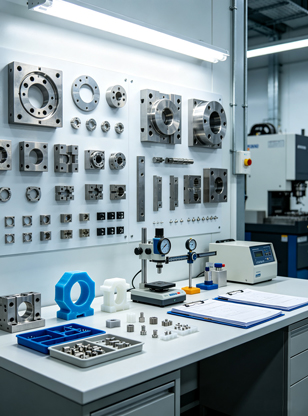
CNC machining is often selected for tighter tolerances, smoother machined surfaces, and functional testing.
Injection molding can produce consistent molded surfaces once tooling is properly developed, but dimensions are affected by mold design, shrinkage, cooling, and material behavior.
Cost and Quantity
For one or a few early prototypes, 3D printing may be cost-effective and fast.
For functional prototypes or low-volume parts, CNC machining may provide better material performance without tooling investment.
For higher-volume plastic production, injection molding may have higher upfront tooling cost but lower unit cost after production begins.
Recommended Development Path
Many projects follow this path:
1. Use 3D printing for early concept models.
2. Use CNC machining for functional prototypes and validation.
3. Use injection molding for production after the design is approved.
This path helps reduce risk because each step validates the product before larger investment.
When to Choose 3D Printing
Choose 3D printing when the design is early, speed is important, physical visualization is needed, geometry is complex, and final material performance is not yet required.
When to Choose CNC Machining
Choose CNC machining when the part must be functional, made from metal or engineering plastic, tested under real conditions, produced with tighter tolerances, or made in low to moderate quantities.
When to Choose Injection Molding
Choose injection molding when the design is finalized, quantity is high, the part is plastic, repeatability is important, and tooling investment is justified.
Final Thoughts
3D printing, CNC machining, and injection molding should not be viewed as competing processes only. They can support different stages of the same product development journey.
The best process depends on what you need right now: concept validation, functional testing, or repeatable production.
At Innova Forge, we help customers compare process options and move from prototype to production with clearer manufacturing decisions.
Need Help Choosing a Process?
Upload your CAD file, drawing, quantity, material requirement, and application notes. Our team can review whether 3D printing, CNC machining, injection molding, or a combination of processes is suitable for your project.
Ready to discuss your project?
Upload your CAD file, drawing, material requirement, quantity, and project notes. Our team can review your requirements and help identify suitable manufacturing options.




 ️
️