Design for Manufacturability, often called DFM, is the process of designing a part so it can be manufactured efficiently, consistently, and cost-effectively while still meeting its functional requirements.
For custom manufacturing, DFM is important because small design decisions can have a major impact on machining time, tooling complexity, tolerance control, surface finish, production cost, and lead time.
At Innova Forge, DFM review helps customers identify potential manufacturing issues before production begins. The goal is not to change the purpose of the part. The goal is to make sure the design can be manufactured to specification with fewer risks and unnecessary costs.
Why Design for Manufacturability Matters
A design may look correct in CAD, but that does not always mean it is easy to manufacture. Certain features may require special tooling, multiple setups, slower machining, more inspection, or additional finishing work.
DFM can help:
- Reduce unnecessary machining time
- Improve tolerance planning
- Avoid difficult or costly geometry
- Reduce tooling and fixturing complexity
- Improve surface finish consistency
- Reduce production risk
- Support smoother prototype validation
- Improve repeatability for production
- Help control cost and lead time
A good DFM review can often identify small changes that make a part easier to produce without affecting its function.
DFM for CNC Machining
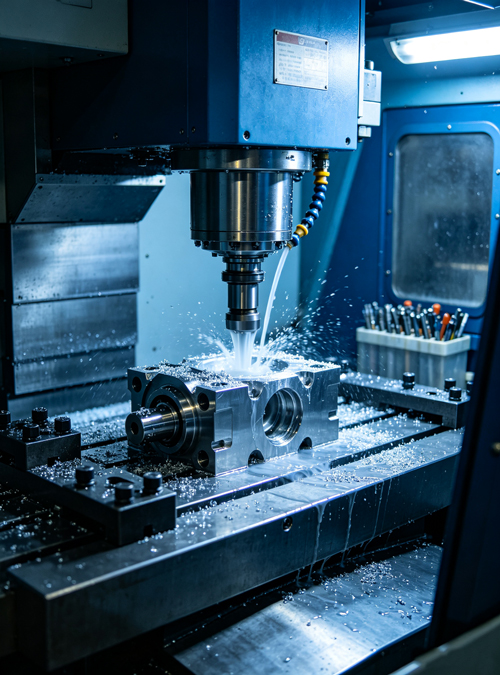
For CNC machined parts, manufacturability is influenced by material, geometry, tool access, wall thickness, internal corners, hole depth, tolerance, and surface finish.
Common CNC machining DFM considerations include:
- Avoid unnecessarily deep pockets
- Avoid extremely thin walls where possible
- Use standard hole sizes when practical
- Use realistic tolerances
- Add fillets where sharp internal corners are not required
- Avoid hard-to-reach features
- Reduce the number of required setups
- Choose machinable materials
- Identify critical dimensions clearly
CNC machining is flexible, but complex geometry can still increase cost and lead time.
DFM for Injection Molding
For injection molded parts, DFM focuses on moldability, wall thickness, draft angles, ribs, bosses, undercuts, shrinkage, gate location, surface texture, and material flow.
Common injection molding DFM considerations include:
- Maintain consistent wall thickness
- Add draft angles for part ejection
- Avoid unnecessary undercuts
- Design ribs and bosses carefully
- Consider shrinkage and warpage
- Review parting line location
- Plan gate and ejector locations
- Choose suitable resin
- Consider cosmetic surfaces
A molded part should be reviewed before tooling because mold changes can be expensive after the tool is made.
DFM for Sheet Metal and Laser Cutting
For sheet metal parts, DFM considers material thickness, bend radius, hole-to-edge distance, bend relief, flat pattern layout, forming direction, welding, and finishing.
Common sheet metal DFM considerations include:
- Use suitable bend radius
- Keep holes away from bend lines
- Avoid overly narrow tabs
- Confirm material thickness
- Consider bend direction
- Add bend relief where needed
- Plan finishing and coating
- Account for powder coating thickness where relevant
Good sheet metal DFM helps improve consistency, reduce cracking, and support efficient fabrication.
Tolerances and DFM
Over-tolerancing is one of the most common causes of unnecessary manufacturing cost. Not every dimension needs tight control.
A strong DFM approach identifies:
- Which dimensions are critical
- Which dimensions can use standard tolerances
- Which features affect fit and function
- Which surfaces are cosmetic
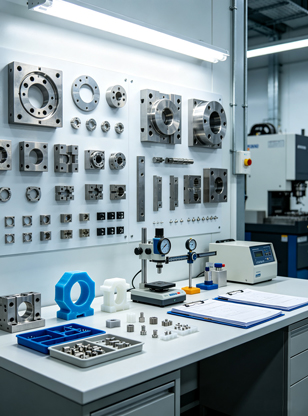
- Which dimensions need inspection
- Which tolerances may increase cost significantly
Tight tolerances should be used where they matter, not everywhere.
Material Selection and DFM
Material choice is also part of DFM. A material that looks good on paper may be expensive, difficult to machine, hard to finish, or not ideal for the application.
DFM review can help compare materials based on:
- Strength
- Weight
- Machinability
- Corrosion resistance
- Heat performance
- Chemical resistance
- Surface finish options
- Cost
- Lead time
- Availability
Material alternatives can sometimes improve manufacturability without compromising function.
Surface Finish and DFM
Surface finish can affect part design, tolerance, and production planning. For example, powder coating may add thickness, anodizing may affect appearance depending on aluminum grade, and polishing may require more accessible surfaces.
DFM should consider:
- Which surfaces are cosmetic
- Which surfaces are functional
- Areas requiring masking
- Finish thickness
- Finish color or texture
- Handling requirements
- Impact on mating features
Surface finish should be defined early, not after the part is already made.
Prototype DFM vs Production DFM
A prototype may be designed to test fit, function, or appearance. A production part must be repeatable, cost-effective, and suitable for larger quantities.
Prototype DFM may focus on speed and validation. Production DFM may focus more on consistency, repeatability, cost control, tooling, inspection, and finishing.
For many projects, the best approach is to prototype first, review the results, and then improve the design before production.
Final Thoughts
Design for Manufacturability helps customers reduce risk before production begins. It connects design intent with practical manufacturing requirements.
A good DFM review can improve cost, lead time, quality, consistency, and production readiness. It can also help customers avoid expensive changes later in the process.
At Innova Forge, we support DFM review across CNC machining, sheet metal fabrication, laser cutting, injection molding, mold making, 3D printing, and prototype-to-production projects.
Need a Manufacturability Review?
Upload your CAD file, drawing, material requirement, and project notes. Our team can review your design and help identify practical manufacturing considerations before production begins.
Ready to discuss your project?
Upload your CAD file, drawing, material requirement, quantity, and project notes. Our team can review your requirements and help identify suitable manufacturing options.



 ️
️