CNC machining and injection molding are two of the most common manufacturing processes used to produce custom parts. Both can support high-quality components, but they are used for different project needs.
CNC machining is often ideal for prototypes, low-volume production, precision components, and parts that require strong material performance without tooling investment. Injection molding is often better for repeatable plastic production when the design is finalized and the required quantity is high enough to justify mold tooling.
What Is CNC Machining?
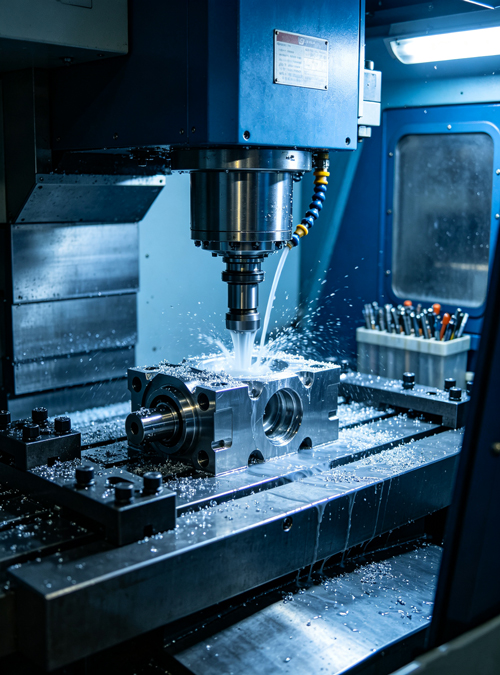
CNC machining is a subtractive manufacturing process. A block, bar, plate, or sheet of material is cut using computer-controlled tools to create the final part. It supports metals and plastics and is commonly used for prototypes, fixtures, housings, brackets, shafts, precision components, and low-volume production.
What Is Injection Molding?
Injection molding produces plastic parts by injecting molten plastic into a custom mold. Once the material cools, the molded part is ejected. It is commonly used for repeatable plastic production parts, housings, enclosures, clips, covers, handles, and product components.
Key Difference: Tooling vs No Tooling
CNC machining usually does not require a custom mold, making it faster and more flexible for prototypes, design changes, and low-volume production. Injection molding requires mold tooling, which means higher upfront planning and cost, but better repeatability and unit cost potential for larger volumes.
When CNC Machining Is a Better Choice
CNC machining may be better when you need a prototype quickly, the design may still change, quantity is low or moderate, tight tolerances are required, the part requires metal, tooling cost is not justified, or functional testing is needed before production.
When Injection Molding Is a Better Choice
Injection molding may be better when the design is finalized, the part is plastic, production quantity is high, repeatability is important, unit cost must decrease at volume, and the molded appearance or geometry is important.
Cost and Lead Time Comparison
CNC machining usually has lower upfront cost because mold tooling is not required. However, unit cost may remain higher as volume increases. Injection molding usually has higher upfront cost due to tooling, but unit cost may become more efficient for larger production quantities.
CNC machining is often faster for prototypes and small batches. Injection molding requires more time upfront because the mold must be designed, manufactured, tested, and approved.
Material Options
CNC machining supports metals such as aluminum, stainless steel, mild steel, alloy steel, tool steel, brass, copper, and titanium. It also supports engineering plastics such as ABS, Nylon, POM, PC, PMMA, PEEK, PTFE, PP, and HDPE.
Injection molding mainly supports thermoplastics such as ABS, PP, PE, PC, Nylon, POM, PMMA, TPE, and TPU.
Prototype First, Mold Later
For many product development projects, the best approach is to start with CNC machining for prototypes, then move to injection molding once the design is approved. This helps validate fit, function, material performance, dimensions, and assembly before investing in tooling.
Final Thoughts
CNC machining is often better for prototypes, low-volume production, precision parts, and flexible design development. Injection molding is often better for repeatable plastic production once the design is finalized and the quantity supports tooling investment.
At Innova Forge, we help customers review manufacturing options before production begins so they can choose the process that best supports their project requirements.
Ready to discuss your project?
Upload your CAD file, drawing, material requirement, quantity, and project notes. Our team can review your requirements and help identify suitable manufacturing options.








 ️