

 ️
️
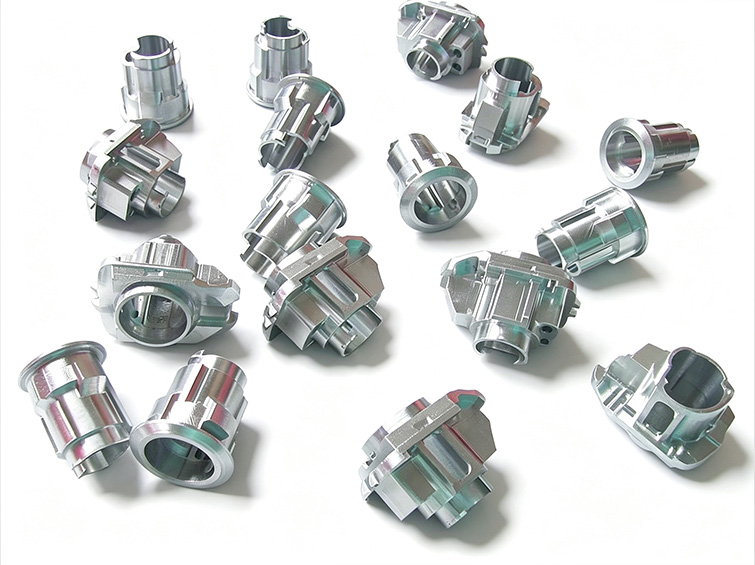
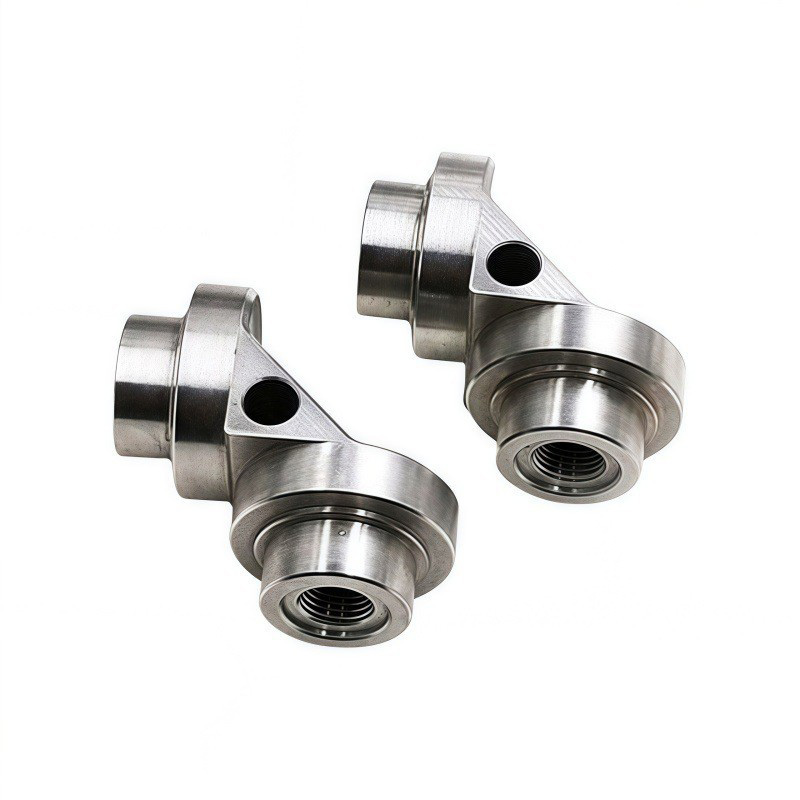
A one-piece valve body for clean low-pressure fluid distribution.
The valve body integrates several internal flow channels, valve-core interfaces, mounting features, and sealing surfaces within one corrosion-resistant component.
It is used in water purification, food and personal-care filling systems, environmental water treatment, small gas valves, vacuum or low-pressure pneumatic equipment, and general medical fluid assemblies.
Rust contamination, multi-piece leakage, poor channel alignment, and internal burrs.
The customer’s cast-steel and standard 304 designs developed corrosion in wet or mildly acidic service. Multi-piece construction created several sealing interfaces, while repeated three-axis setups reduced channel alignment.
- Rust and metal contamination in water or food-process fluid
- Leakage at multiple assembled sealing interfaces
- Valve-core sticking due to flow-channel misalignment
- Intergranular corrosion risk after machining standard 304
- Residual burrs damaging seals and creating internal leakage
- Additional fitting and adjustment during final assembly
The customer needed a cost-effective stainless valve body that remained clean, leak-free, and dimensionally consistent in wet and mildly corrosive service.
Primary engineering considerationWhy material grade, channel geometry, and internal cleanliness were all functional requirements.
304L was selected to reduce sensitization and intergranular-corrosion risk while remaining more economical than 316L for the specified mild-corrosion environment.
A dense forging reduced porosity, but the component also required aligned internal channels, burr-free intersections, smooth sealing faces, and stable dimensions after machining.
304L material condition, forging density, channel coaxiality, internal burr removal, sealing-face Ra, stress stability, food-contact cleanliness, passivation, and pressure integrity.
A forged one-piece valve body with clean integrated channels.
Low-carbon 304L forging
The dense forged blank reduced internal voids and provided corrosion resistance suitable for wet and mildly acidic service.
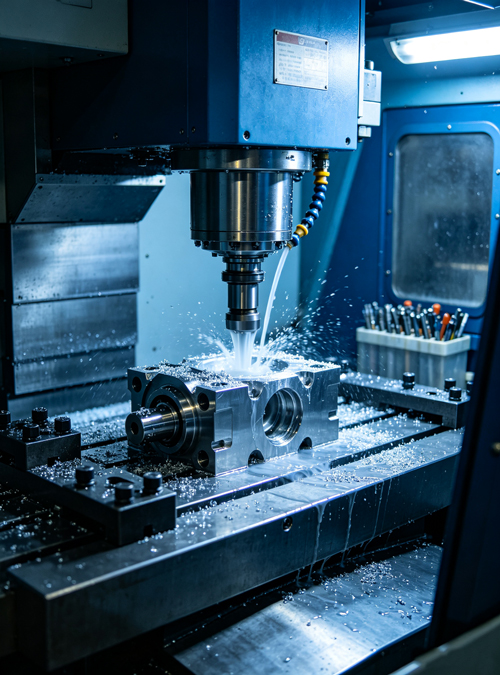
One-setup multi-axis machining
Internal and external cavities, mounting bosses, location grooves, and holes were machined in one controlled setup. The supplied record identifies channel coaxiality of 0.003 mm or better.
Deep-hole drilling and abrasive-flow deburring
Intersecting flow passages were drilled and cleaned using abrasive-flow deburring to remove fragments from inaccessible areas.
High-finish sealing and stress relief
Sealing faces were finish-milled to Ra 0.4 or better, followed by low-temperature stress relief for dimensional stability.
Electropolishing, passivation, and leak testing
The surface was electropolished and passivated, and every finished valve body received a pressure-hold leak test.
A clean-fluid manufacturing route from forging to pressure-tested valve body.
304L forging preparation
Verify the dense low-carbon stainless blank.
Multi-axis cavity machining
Machine the internal and external features in one primary setup.
Deep-hole channel drilling
Create the intersecting fluid passages.
Abrasive-flow deburring
Remove burrs and loose metal from internal channel intersections.
High-finish sealing-face machining
Produce Ra 0.4 or better sealing interfaces.
Low-temperature stress relief
Stabilize the component for long-term service.
Electropolishing and passivation
Improve cleanliness and corrosion resistance.
Leak test and CMM inspection
Verify pressure integrity, hole position, parallelism, and coaxiality.
Control of fluid cleanliness, sealing, and valve-core alignment.
Every part received a pressure-hold leak test. Sampled CMM inspection covered hole position, parallelism, coaxiality, and the critical valve-core interfaces.
304L material, forging density, channel coaxiality, burr-free passages, sealing-face roughness, passivated surface condition, pressure integrity, and batch dimensional consistency.
Lower leakage and contamination with faster final assembly.
The customer reported that rust contamination and fluid-quality problems were resolved and that valve-core motion became more stable.
The one-piece body reduced maintenance interruptions and eliminated the need for secondary fitting before assembly.
Quantitative, certification, qualification, and environmental-test outcomes are based on the supplied project documentation and should be verified against internal records before public publication.
Expanded into larger-flow and compact valve variants.
The supplied record states that the product passed the customer’s food-hygiene inspection and entered long-term batch procurement. Additional high-flow and miniaturized valve bodies were developed afterward.
Project outcome summary based on the supplied case record